TheXbox layoffs protestshave developed into one of the most significant labor disputes in the video game industry this year.
Unionized developers, laid-off employees and supporters held coordinatedSave Our Devsrallies on July 15, 2026, at Microsoft and Xbox-affiliated locations across the United States and Canada. The Communications Workers of America and CWA Canada have also accused Microsoft of violating labor obligations when implementing the cuts.
Microsoft announced on July 6 that it intends to eliminate approximately 3,200 Xbox roles during fiscal year 2027, beginning with around 1,600 immediate layoffs. The company says it has contacted unions to begin effects bargaining and remains committed to supporting affected employees.
What Happened at the Save Our Devs Protests?
Workers organized theSave Our Devs protestrallies after layoffs affected teams across Bethesda Game Studios, ZeniMax Online Studios, id Software, Obsidian Entertainment and other parts of Microsoft's gaming division.
Demonstrations were reported at six locations, including:
- ZeniMax headquarters in Rockville, Maryland
- Microsoft's headquarters in Redmond, Washington
- Bethesda and id Software locations in Texas
- Bethesda Game Studios Montreal
- Obsidian Entertainment in Irvine, California
More than 150 people reportedly attended the Rockville demonstration alone, while separate reporting described hundreds of workers and supporters gathering outside ZeniMax's headquarters. The coordinated protests included current employees, former developers, union organizers and members of the gaming community.
The demonstrations were held on Wednesday, July 15, not July 17. As of Friday, July 17, the dispute remained active through labor complaints, negotiations and continuing public pressure.
How Many Xbox Jobs Are Being Cut?
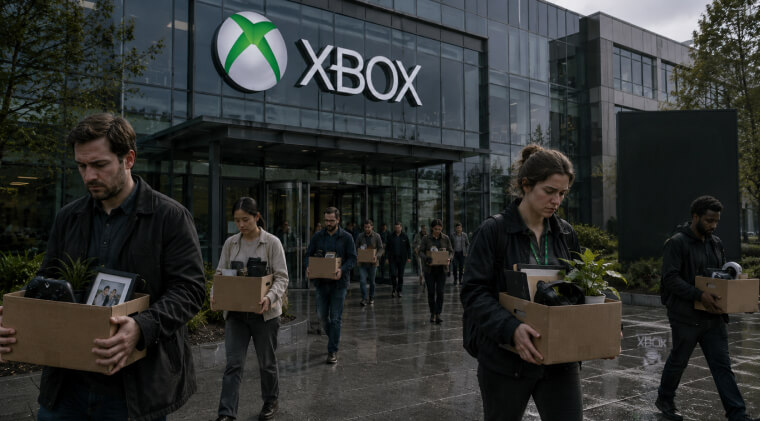
Microsoft plans to remove approximately 3,200 roles from Xbox throughout fiscal year 2027.
The first phase involved about 1,600 immediate job eliminations announced on July 6. Further cuts are expected during the remainder of the fiscal year.
Microsoft described the changes as the most significant restructuring in Xbox history. The company said its gaming business had become too costly and complex and had not grown at the expected pace despite investments in Game Pass, multiplatform releases and a larger portfolio of studios.That business context also connects to ARPAY coverage of end of cheap Xbox Game Pass and Xbox Game Pass price changes.
The restructuring affects Activision, Bethesda and ZeniMax, Blizzard, King, Mojang and Xbox Game Studios. Microsoft also announced that four studios would leave Xbox under new management.
According to the company, Compulsion Games and Double Fine Productions will become independent, while Ninja Theory and Undead Labs will move to new ownership with funding to continue their current projects. Microsoft also said that none of its publicly announced first-party games or projects were being cancelled as part of these reductions.
Which Xbox Studios Were Hit Hardest?
Public WARN notices and industry reporting provide a clearer picture of the cuts at individual studios.
id Software
A Texas WARN notice showed that 136 id Software positions were eliminated. That figure included 96 employees based at the studio's Richardson office and 40 remote workers reporting to that location.
A further 22 employees at Bethesda Game Studios Austin were included in the same Texas filing. Of the 158 total affected positions, 146 were represented by the Communications Workers of America.
id Software later said it still had the workforce required to continue developing the games and technology for which it is known. However, the scale of the cuts has raised concerns about the loss of experienced developers and technical knowledge.
ZeniMax Online Studios and ZeniMax Media
Maryland WARN filings listed:
- 213 layoffs at ZeniMax Online Studios
- 166 layoffs at ZeniMax Media
The ZeniMax Media figure includes employees connected to Bethesda Game Studios and its publishing operations, although the filing does not provide a precise breakdown between those divisions.
The cuts have drawn particular attention because ZeniMax Online Studios operates The Elder Scrolls Online, while Bethesda and id Software are responsible for franchises including Fallout, The Elder Scrolls, Doom and Quake.For wider background on Microsoft’s studio strategy, see Bethesda exclusivity background.
Why Has CWA Filed Complaints Against Microsoft?
The Communications Workers of America says Microsoft failed to meet its bargaining obligations before implementing layoffs involving unionized workers.
Unfair labor practice charges filed in the United States accuse Microsoft and subsidiaries including Xbox, ZeniMax Media, id Software and Bethesda Game Studios of alleged bad-faith bargaining and failing to provide required information.
CWA Canada has raised similar allegations concerning layoffs at Bethesda Game Studios Montreal. Union representatives claim employees were dismissed without sufficient notice or consultation while collective bargaining was underway.
These accusations have not yet resulted in a final legal ruling. They remain allegations that will need to be addressed through the appropriate labor boards, negotiations or other legal proceedings.
The distinction is important: the unions are alleging that Microsoft violated labor obligations, but the company has not been found legally responsible for those claims at this stage.
What Are Xbox Workers Demanding?
CWA has said it intends to pursue both legal and contractual protections for affected employees.
Its stated priorities include:
- Fairer severance arrangements
- Continued healthcare coverage
- Opportunities for qualified workers to transfer into open positions
- Recall rights if jobs become available again
- Greater transparency about project and staffing decisions
- Bargaining over the consequences of the layoffs
The union argues that developers responsible for Xbox's most valuable games should have a meaningful role in decisions that affect their jobs, families and long-term careers.
The dispute also involves a legal distinction between decisional bargaining and effects bargaining. Decisional bargaining concerns whether an employer must negotiate over the decision to make layoffs. Effects bargaining concerns the consequences of that decision, such as severance, benefits, transfers and recall rights.
CWA alleges Microsoft should have bargained before implementing the cuts. Microsoft says it has contacted the union to begin effects bargaining.
What Has Microsoft Said About the Protests?
Microsoft has acknowledged employees' right to demonstrate and says it is committed to the bargaining process.
In a statement provided to Game Developer, an Xbox spokesperson said the company recognized that the layoffs were difficult for workers, had contacted the union to begin effects bargaining and remained focused on supporting affected employees.
Microsoft has presented the restructuring as an attempt to reduce management layers, simplify decision-making and concentrate investment on higher-priority franchises and projects.
The company said the decisions did not reflect the talent or dedication of the workers losing their positions. It nevertheless maintained that Xbox needed a major reset because its cost structure and business margins were not sustainable.
That explanation has not satisfied union representatives, who argue that employees are being forced to absorb the consequences of decisions made by senior management.
Why the Xbox Layoffs Matter to Players
The immediate effect of the restructuring is on the thousands of employees and families directly affected by the cuts.
Players may also be concerned about what the loss of experienced developers means for the studios behind major Xbox franchises.For a separate player-facing change, see Xbox achievements update.
Large games depend on institutional knowledge built over years. Developers maintain internal engines, production pipelines, accessibility systems, quality-assurance processes, live-service infrastructure and detailed knowledge of fictional worlds.
Removing large numbers of experienced employees does not automatically mean announced games will be cancelled. Microsoft has explicitly said that its publicly announced first-party projects remain active.
However, reduced teams may face heavier workloads and longer transitions as remaining employees take responsibility for abandoned roles. Potential consequences can include slower updates, delayed releases, less extensive testing and the loss of specialized expertise.
CWA has directly connected its labor argument to players, claiming that deep staff reductions could eventually affect game quality and development schedules. That remains the union's position rather than an established outcome.
Obsidian, Redmond and Montreal Show the Dispute Is Wider Than Bethesda
The protests were not confined to one Bethesda office.
Workers and supporters demonstrated at Microsoft's Redmond headquarters, while Obsidian Entertainment employees and supporters participated in Irvine. Bethesda Game Studios Montreal brought a Canadian labor-law dimension to the dispute.
This wider participation makes the Save Our Devs campaign more than a local disagreement over a single studio's layoffs.
It represents a coordinated response across Microsoft's gaming portfolio, involving employees working under different studios, bargaining units and national labor systems.
The campaign also demonstrates how unionized game workers are combining workplace negotiations with public demonstrations and formal labor complaints.
Ubisoft Barcelona Strike Reflects Wider Games-Industry Pressure
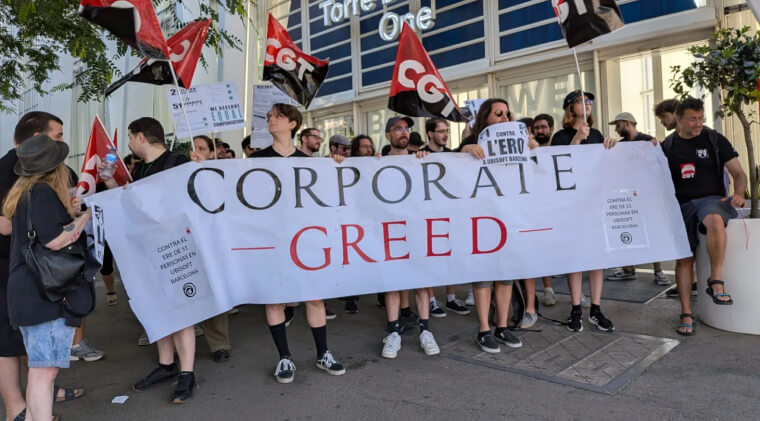
The Xbox dispute is unfolding during another period of labor action elsewhere in the games industry.
Ubisoft Barcelona employees organized a series of strikes over proposed layoffs affecting 51 workers. The actions began on June 30 and were scheduled on Tuesday and Thursday afternoons through July 17.
Workers demanded a binding plan to retain the affected employees, stronger protection against future collective dismissals, action on salary and promotion commitments and the restoration of more flexible remote-work arrangements.
The Ubisoft action is separate from the Microsoft case. However, both disputes reflect growing frustration among developers who argue that successful projects and valuable franchises no longer provide meaningful job security.
What Happens Next in the Xbox Layoffs Dispute?
The next stage will likely take place through negotiations and labor proceedings rather than public demonstrations alone.
CWA can continue seeking agreements over severance, healthcare, transfers, recall rights and other consequences of the layoffs. Labor authorities will separately assess the complaints alleging that Microsoft failed to bargain appropriately or provide required information.
Microsoft may dispute those allegations while continuing effects bargaining with union representatives.
No final ruling had resolved the complaints as of July 17, 2026.
The Save Our Devs rallies have nevertheless changed the character of the story. What began as a major corporate restructuring has become a visible test of how Microsoft manages a large and increasingly unionized video game workforce.
For employees, the dispute concerns jobs, benefits and bargaining rights. For Microsoft, it concerns the future structure and financial health of Xbox. For players, it raises a broader question: what happens to major game franchises when the teams responsible for building them are repeatedly reduced?
Sources and Reporting Notes
This report was prepared using Microsoft's July 6 restructuring announcement, official CWA statements, public WARN information and reporting from Game Developer, Ars Technica and PC Gamer. The article distinguishes Microsoft's confirmed actions from allegations made by unions and workers.
Editorial note:ARPAY sells digital gaming products, including Xbox gift cards. That commercial activity did not influence the reporting or conclusions in this article.
Related ARPAY Resource
Looking for Xbox credit for a planned Game Pass, game or add-on purchase? Explore ARPAY's Xbox gift cards and choose a fixed amount that matches your existing gaming budget.